Showing posts with label foot pain. Show all posts

Wednesday, May 22, 2019

Numbness & Tingling In My Toes...

...What can I do for my Neuromas?


To understand what neuromas are, what causes them, treatment options and long-term prognosis, you need to start with a quick definition of a nerve. 

According to Merriam-Webster, a nerve is "any of the filamentous bands of nervous tissue that connect parts of the nervous system with the other organs, conduct nerve impulses, and are made up of axons and dendrites together with protective and supportive structures."

The nerves we are referencing for neuromas are small, string-like structures that provide sensation and/or give the signal to muscles to move.
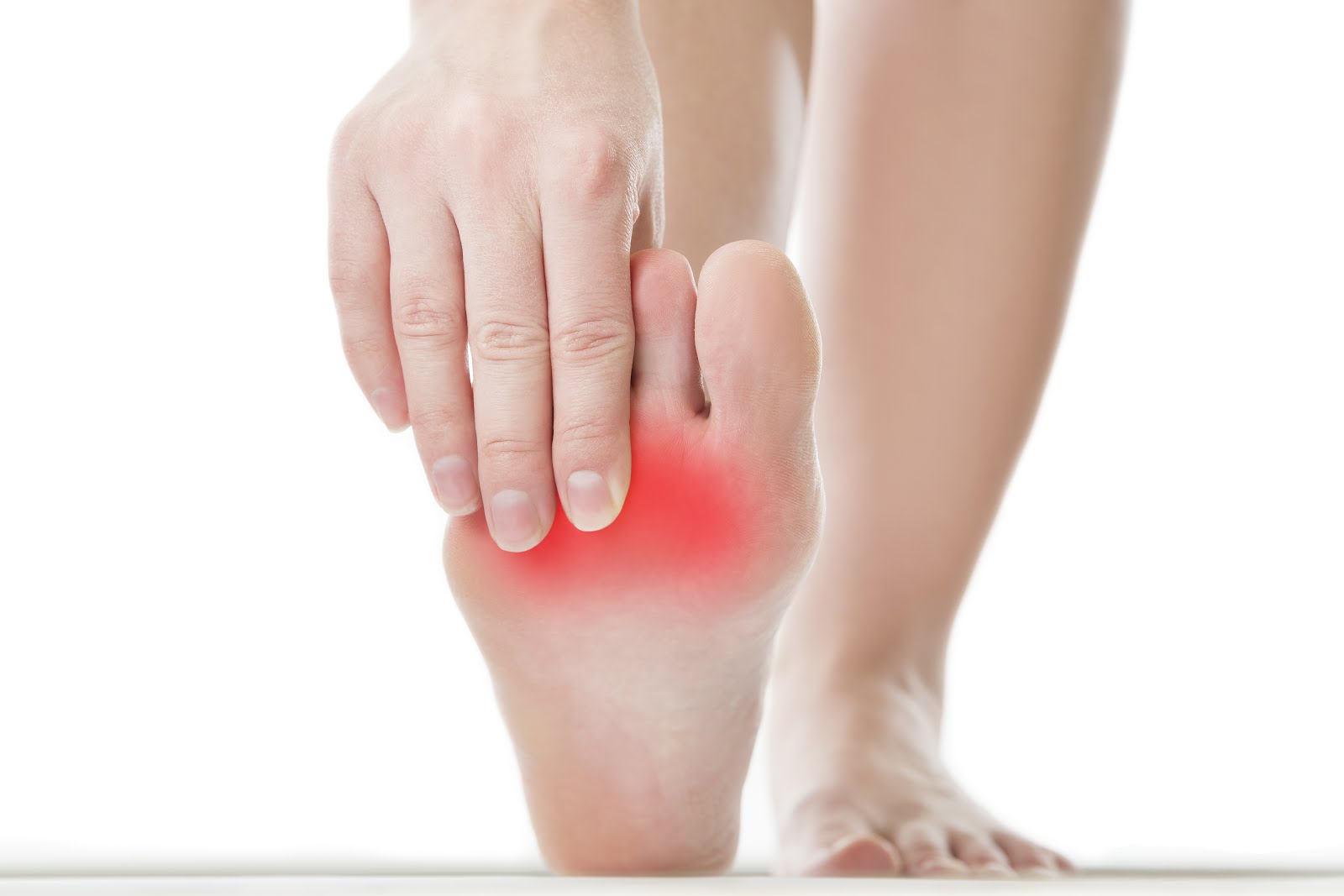

So, What Are Neuromas?


Some nerves in the foot & ankle may be susceptible to injury because of their location. The most commonly injured nerves here are on the ball of the foot, located at the base of the second, third and fourth toes. These nerves provide sensation only to the middle three toes and may be compressed by a ligament that runs over it. A neuroma is when something, like inflamed tissue or other object in the body, presses on the nerve, causing irritation.


Signs & Symptoms of Neuromas


  • Pain on the ball of the foot.
  • Numbness, or a burning/shooting/tingling sensation in the toes. Either or both of these may be present.
  • Cramping in the toes
  • Aggravation by activities like running, aerobics or activities that put stress on the ball of the foot.
  • Lessening of pain when removing the shoe and rubbing the affected area.
  • Aggravation of pain in the ball of the foot from driving, by high heels or by walking barefoot.
  • Numbness in the foot while active; for example, while on a treadmill or elliptical, doing lunges or Zumba-style classes.

Causes of Neuromas


Difference between an unaffected nerve
and a Neuroma, from
SouthFloridaSportsMedicine.com/neuroma.html
  • Compression of the nerve against a tight ligament that connects the metatarsals.
  • Arthritis or bone spurs in the adjacent joints.
  • Soft tissue cysts causing nerve compression.
  • Trauma to the ball of the foot.
  • Nerve irritation from tight shoes; excessive barefoot walking on hard floors; tennis, running and other exercise that put stress on the ball of the foot.

Treatment for Neuromas


Treatment for neuromas, as with all cases we see, begins with a thorough history and physical examination of the foot with an emphasis on the affected areas. The goal of treatment will be to reduce inflammation around the nerve and prevent further trauma from occurring. Treatment may include, but not be limited to:
  • Use of anti-inflammatories to lessen inflammation. Oral medication or cortisone injections can be beneficial in many cases.
  • Changing to wider, cushioned shoes without high heels.
  • Temporarily changing physical activity to non weight-bearing exercises like biking and/or swimming.
  • Physical therapy to reduce inflammation in the affected areas.
  • Use of metatarsal pads.
  • Fitting of orthotics to correct faulty biomechanics. These devices can be used in smaller heels and all athletic shoes.
  • Localized injections into the nerve to temporarily stop transmission of impulses from the affected nerve(s), also known as sclerosing alcohol injections.
  • Surgical removal of the nerve may be necessary if conservative treatment fails.
The cases where surgical treatment becomes necessary are few and far between, as most neuromas respond to conservative treatment. In those cases where surgery is required to alleviate pain associated with a neuroma, patients can expect a short outpatient procedure with one-two days of accompanying rest. The procedure is done under local or twilight anesthetic and the patient will need to wear a surgical shoe for the following 4-5 days. Post-operative pain is minimal, but physical therapy may be necessary for a short period. 

Within 2-4 weeks, the patient can progress back to wearing regular shoes. Certain physical activities like swimming or biking can resume within 1-2 weeks, but other sports may require avoidance for up to 8 weeks.

Prognosis (Short & Long-Term)


One word: EXCELLENT!


Use our online scheduler to book your appointment! If you have a busy schedule during the week, we are open Saturdays by appointment only in our recently redone Plantation office. 


Click here to book your appointment and get yourself back to your best!


Tuesday, April 2, 2019

Is It "Growing Pains" or Something Else?

Don't Miss the Underlying Problem Causing "Growing Pains"


You may often hear your child complain about foot, ankle or leg problems that you, naturally, attribute to "normal growing pains". While in a small number of cases this could be true, the majority of the time, the pains are actually caused by malalignment problems. Your child could be suffering from a problem like flatfoot or knock knee. Here's how you can tell the difference and help set your child up for a healthier, happier life!

Causes (What to Look For)


  • Excessively flat feet, or feet that point outwards when your child walks.
  • Knees appearing to touch each other when your child walks.
  • Tight muscles - especially the calf, hamstrings and external rotator muscles of the hips.
  • The following activities can cause malalignments to develop
    • Walking barefoot
    • Playing sports or other activities with poorly fitting shoes.
    • Occasionally, rapid growth can lead to imbalances
Pre- and post-operation examples of flatfoot in children


Symptoms (What's the Complaint?)


  • Pain during and after activity, especially along the inside of the shinbone and knees.
  • Premature fatigue during activity.
  • General avoidance of activity and exercise.
  • Leg pain, especially at night, causing lack of sleep.
  • Lower back pain.
  • Often associated with toe walkers.

Treatment (Get Back to Their Best)


When we have a child or young adult come through the office complaining of symptoms that could be caused by lower extremity malalignment, here is what we check to diagnose and treat the underlying cause: 

  • Medical history of your family to be sure there aren’t infections, traumas or inflammatory conditions that can mimic problems in the lower extremity.
  • A thorough lower extremity exam by our doctors to identify areas of tightness, weakness, instability and pain.
  • Changing of shoe gear to add more support.
  • Advisement against going barefooted, especially when your child is experiencing pain.
  • Physical therapy to decrease overall muscle tightness and to improve muscle strength, coordination, reaction time, and flexibility.
  • Custom molded orthotics (a shoe insert made from a plaster impression of your child's foot) to realign the lower extremity. In many cases this will eliminate the leg pains that these children experience almost overnight.
  • Casting the leg to stretch the calf muscle may be needed. This is a temporary walking cast that requires undergoing a lot of activity while in the cast. If a child has tight muscles below the knee, a walking cast is crucial to help permanently eliminate the pain.

Prognosis (Staying Healthy)

Early identification of predisposing causes that lead to these growing pains is important to your child’s overall health and wellness. Many children who have been diagnosed with growing pains have primary causes that can be addressed with great success. 

Many of these children are not able to keep up with their peers during activity due to pain and premature fatigue, ultimately affecting their self-esteem. They may become less likely to participate in sports and lead a less active lifestyle in general. 

Inactive children usually become inactive adults, who may be overweight. It is critical to understand why your child is having leg discomfort rather than brushing off the problem as "growing pains." Really, there is no such thing.

Plus, the Foot, Ankle & Leg Specialists can always quickly eliminate these pains and help your child get back to their happy, healthy, active best.

Use our online scheduler to book your appointment. If you have a busy schedule during the week, we are open Saturdays by appointment only in our recently redone Plantation office. 

Click here to book your appointment and get your child back to their best!


Wednesday, March 27, 2019

5 Common Foot & Ankle Injuries in Youth Athletes


Different Effects, Same Goals - Healthy Kids!


Parents should encourage their children to participate in sports. Not only will they gain cardiovascular benefits, but sports also helps to develop attributes like self discipline, teamwork and an appreciation of the importance of good health habits that they will carry throughout their lifetime. In children younger than 10, we believe in multi-sport participation with a training emphasis on proper technique and coordination.
     
We advise that sport specialization be delayed until late teenage years. Research shows that children who specialize too early are more likely to experience foot and ankle injuries. In addition to proper-fitting and supporting footwear, a dynamic warm-up specific to the sport being played is recommended for all ages in order to prevent injury. 

Differing from adults, children are more susceptible to growth plate injuries rather than injuries to tendons and ligaments. These growth plates typically do not finish closing until 15-18 in boys and 13-16 in girls. Many children also suffer from torsional imbalances such as in-toe or out-toe; however, the majority them outgrow these conditions without medical treatment. Still, see a foot and ankle specialist if your child is consistently tripping during activity. It could be related to these imbalances.

Tibial torsion examples in children and youth athletes.
We've put together a list of five common foot & ankle injuries that we see in children that come through our offices, along with different treatments. As always, each case is unique, and we recommend seeing one of our experts if your child is suffering from one of these injuries.

Ankle Sprains


Ankle sprains are typically seen more often in older youth athletes. For younger athletes with the same injury, there tends to be associated growth plate injuries. Immediate treatment is critical to healing and prevention of long term ankle instability. Physical therapy to restore balance and strength is often necessary after offloading the injured ankle.

Pre- and post-operation photos of two types of ankle fractures.

Fractures


If a child is unable to put weight on the injured foot after injury, we recommend an x-ray to rule out a fracture. If the fracture itself is not severe, rest and immobilization with a cast may be enough to let it heal. More complicated injuries may require surgical correction for better long term prognosis. We often see stress fractures in children who participate in over 16 hours of sports practice and activity each week. A good rule of thumb to prevent stress fractures is to keep organized sport participation to fewer hours per week than your child's age in years. 


Heel Pain


Also referred to as calcaneal apophysitis, heel pain is likely caused by an inflammation of the growth plate in the heel from excessive usage, a tight achilles tendon, flat feet, poor fitting cleats or shoes, or blunt trauma. Commonly seen in sprinting sports, like soccer and baseball because of cleat patterns and in basketball from the repeated force when coming down after a rebound. Usual treatment includes rest, immobilization, ice, heel lifts, orthotics, stretching and physical therapy.

Shin Splints


Shin splints are a very common overuse injury. The presence of a tight achilles tendon can cause overuse and inflammation of the weaker dorsiflexion muscles in the front of the leg. In children with flat feet and a tight achilles, overuse of a muscle in the back inside of the leg can become inflamed as well. Treatment includes rest, ice, compression, physical therapy, stretching, strengthening exercises, and orthotics.


Our office is fully equipped and accepts Same Day Appointments for all Urgent/Emergent Foot and Ankle Injuries. If your child is suffering from a foot or ankle injury, save time and money from an expensive trip to Urgent Care or the Emergency Room, and please call the nearest office immediately.

Or, use our online scheduler to book your appointment. If you have a busy schedule during the week, we are open Saturdays by appointment only in our recently redone Plantation office. Click here to book your appointment and get your child back to their best!


Dr. John Goodner, Dr. Robert Sheinberg, Dr. Carlo Messina, Dr. Michael Cohen, Broward Podiatrist


Wednesday, March 20, 2019

Are Stem Cells the Answer to your Foot, Ankle and Leg pain?


Are Stem Cells the Answer to your Foot, Ankle and Leg pain?

     Many patients are avoiding painful and costly surgery by choosing Stem Cell Therapy. We have seen great results for:

Plantar Fasciitis - Heel Pain
Achilles Tendonosis
Tendinitis around the foot and ankle joints
Ankle and Foot Ligament Damage

      If you have had your pain for months, even years, why not try Stem Cells to reduce inflammation and the associated pain to your foot and ankle. Improve your pain and lessen your disability with the latest technology in regenerative medicine. Give yourself a chance to restore your foot and ankle range of motion and decrease the scar tissue formation from your chronic pain or old foot and ankle injury.

     Traditional treatments of repeated cortisone injections and Platelet rich plasma, can present with potential complications and sometimes unclear results. Stem Cell therapy can deliver safer and more reliable outcomes for patient's foot and ankle conditions.

      Go to our website, at SouthFloridaSportsMedicine.com and use the online scheduler to make your appointment at any of our three convenient locations in Broward. Our job is to get you back to your best. See you soon!

http://www.southfloridasportsmedicine.com/joint-lubrication.html


Tuesday, March 19, 2019

Please Doc, Treat My Bunion

Bunions - Causes, Symptoms & Treatments


To help you understand how the Foot, Ankle & Leg Specialists at South Florida Institute of Sports Medicine diagnose and treat them, we are going to start by going over the causes and symptoms of these uncomfortable foot deformities.

What is a Bunion?

Photo of a Bunion

A bunion is a "bone deformity caused by an enlargement of the joint at the base and side of the big toe."1

The medical term for a bunion is Hallux Valgus. "Hallux" refers to your big toe, and "Valgus" is defined as a deformity involving a displacement away from the midline. Put together, your big toe is out of place.

Over time, this displacement will cause the big toe to angle in toward the other toes. Sometimes it will overlap them. Other times, it will rotate or twist. Every time, it's uncomfortable.


What Causes Bunions?

Illustration of bone deformity that causes a bunion.

If your parents or grandparents had bunions, you are likely to get them. Bunions themselves are not hereditary, but they are most commonly caused by a faulty foot structure that may be passed down from your parents or grandparents. 

Wearing tight shoes, foot injuries, neuromuscular problems, or structural foot issues like flat feet and pronated feet can also increase the likelihood of bunions - especially in those people who are predisposed to developing them. 


What are Usual Symptoms of Bunions?


If you have a bunion, you know right away that the main symptom is the discomfort and pain that comes from your bunion rubbing against your shoes. If one of your grandparents told you they wore those ugly shoes because of a bunion, now you know why.

As a bunion gets bigger, it gets more and more painful to walk. Over time, bursitis may occur or arthritis may develop in the area as cartilage wears down.


What Treatments are Available?


Unfortunately, bunions will not correct themselves. If you wait to see a specialist, you are just making it more unlikely that some less drastic treatment methods will fix the bunion.

The goal of any treatment is first, to relieve the pressure and pain caused by the irritation, and second to stop any further growth of the enlargement. Early treatments include protective padding (to eliminate friction), removal of corns or calluses on the foot, changing to those shoes your grandparents wore to accommodate your bunion, orthotic devices to help stabilize the joint, splints, and mobility exercises. 

When these options don't work, you are looking at a surgical correction. Here is what that might look like:


Surgical correction will then require rest for around 3-4 days. You will wear a special shoe or boot for 4-6 weeks, then usually return to athletic shoes by 6 weeks, and dress shoes usually by 12 weeks.

Thankfully, dramatic improvements in bunion surgery techniques means you should experience no long lasting effects from your surgery. You will be able to resume athletic activities, wear your favorite shoes (high heels included), and should not see a recurrence of your bunion. The doctors at Foot, Ankle & Leg Specialists of South Florida have performed thousands of successful bunion surgeries and are up to date on the most recent advances, including hidden minimal incision bunion surgeries (as seen below).

Example before and after of a hidden minimal incision bunion surgery patient.

What Now?


If you are tired of the pain caused by a bunion, you are only making it worse by not having it seen by an experienced professional. It is time to get it checked out by the Foot, Ankle & Leg Specialists of South Florida. 


Go to our website, at SouthFloridaSportsMedicine.com and use the online scheduler to make your appointment at any of our three convenient locations in Broward. Our job is to get you back to your best. See you soon!

Check out more pre and post operative images of our patients at: http://www.southfloridasportsmedicine.com/bunion-pre-and-post-pictures.html

Footnotes:
1. http://www.southfloridasportsmedicine.com/bunions.html